
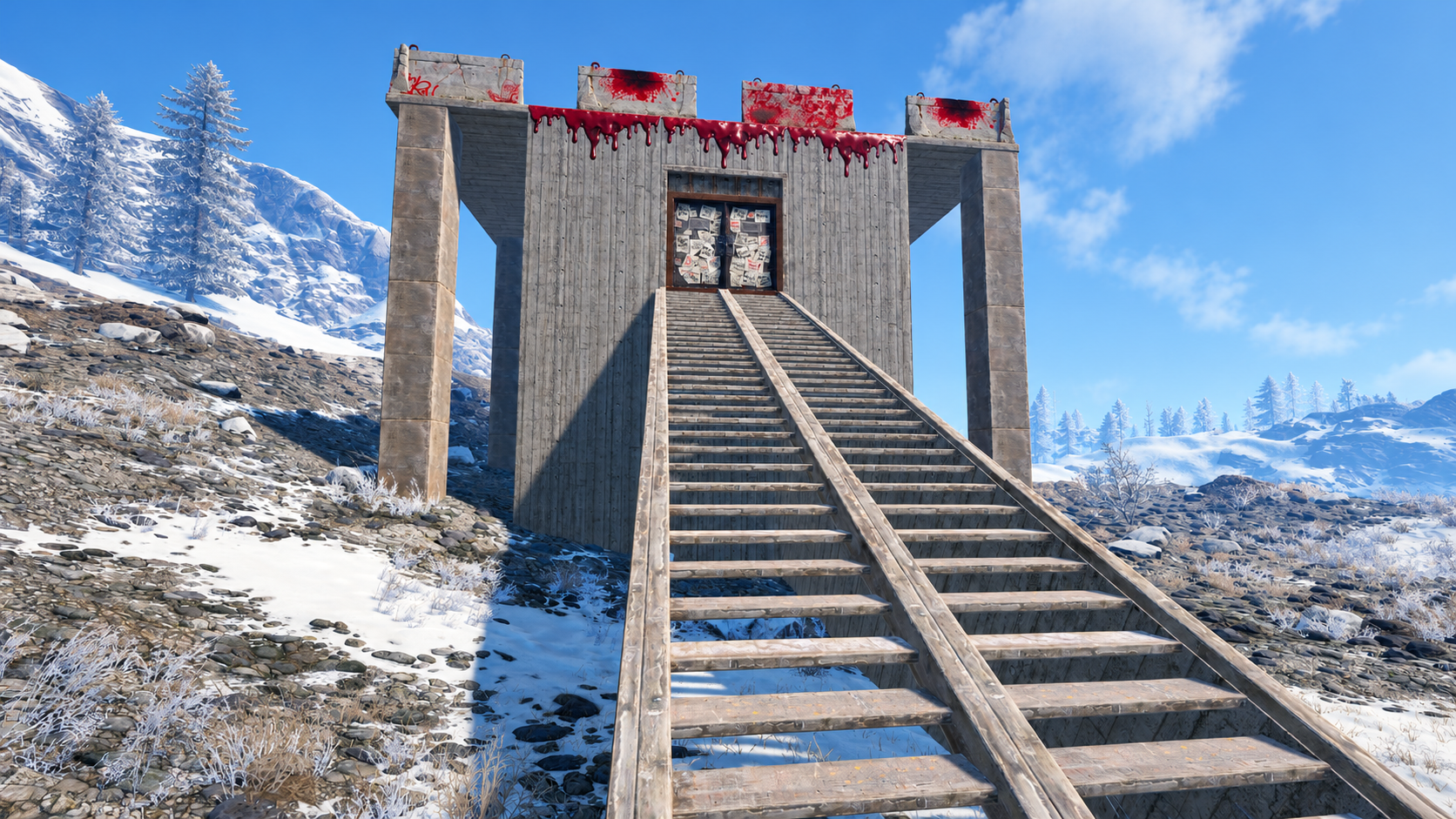
PARADISE HAVEN — The recovered record is brief. Its implications are considerably more troubling.
E-17 — EVACUATION DENIED.
Among the documents recovered during the Project Eden investigation, this entry has become a particular concern for Paradise Haven investigators.
Someone requested or ordered an evacuation. Cobalt refused to authorize it.
The surviving evidence does not explain who made the decision, what circumstances led to the refusal, or what happened to the people affected.
But E-17 is not the only record raising questions about Cobalt's treatment of personnel and civilians.
Other documents recovered across the island describe redirected civilian transfers, containment failures, and eleven recorded casualties.
Investigators have not established whether those incidents were connected to E-17.
What they have established is that Cobalt maintained extensive control over the movement of people during Project Eden's operations.
And that control may be central to understanding what happened.
AN ORDER WITHOUT AN EXPLANATION
Evacuation procedures exist to move people away from dangerous conditions.
A decision to deny an evacuation demands an explanation, particularly when the same investigation has uncovered evidence of containment incidents.
Was E-17 refused because Cobalt considered the situation contained? Were personnel ordered to remain inside a restricted facility? Or did the decision serve a purpose unrelated to their safety?
The recovered documents do not say.
There is no verified connection between the E-17 order and the eleven containment casualties documented elsewhere in the investigation. Investigators also cannot determine whether those deaths occurred before or after the evacuation denial.
Those missing details leave a significant gap in the chronology of Project Eden.
Until further records are recovered, Haven cannot establish whether E-17 was an isolated decision or part of a broader pattern.
THE CIVILIAN TRANSFER RECORDS
Another part of the investigation has raised similar concerns.
Recovered documents indicate that civilian transfers were redirected through Cobalt-controlled infrastructure.
The records establish that people were being moved within a network controlled by the organization, but the reasons for those transfers remain unclear.
Some identifying information also appears repeatedly across separate records, raising questions about how individuals were documented and tracked.
Investigators are examining those entries for connections to other Project Eden findings.
At present, there is insufficient evidence to conclude that the civilian transfers and the E-17 evacuation denial involved the same individuals.
Nevertheless, both discoveries point toward an important part of the investigation that remains unresolved: what authority did Cobalt exercise over the people inside its facilities, and what happened when those people needed to leave?
MORE THAN A RESEARCH OPERATION
Previous Paradise Dispatch reporting established that sealed Project Eden cargo moved through Cobalt Sawmill under shipment designation M-04.
That evidence connected the sawmill to a wider industrial network serving Project Eden. The cargo's final destination remains classified.
The E-17 record brings a different aspect of that network into focus.
Cobalt was not simply transporting equipment and conducting research.
Recovered documents show an organization managing civilian movement, restricted facilities, containment procedures, and industrial shipments across multiple locations.
Whether those operations were coordinated under a single directive remains unknown.
Investigators are now attempting to establish how the records fit together, particularly where decisions involving personnel may have intersected with Cobalt's containment activities.
WHAT HAPPENED TO THE PEOPLE LEFT BEHIND?
That question now sits at the center of the E-17 investigation.
The evacuation denial is documented. The surrounding circumstances are not.
If people were prevented from leaving, investigators need to determine where they were held, why the evacuation was refused, and whether they were subsequently transferred elsewhere.
No recovered evidence currently provides those answers.
The eleven containment casualties remain an equally important part of the investigation, but Haven will not attribute those deaths to E-17 without supporting records.
For now, the distinction between what is documented and what remains suspected must be maintained.
THE INVESTIGATION CONTINUES
Four Project Eden locations are currently available for Islanders to investigate:
- Quarantine Sanctuary
- Eden Medical Facility
- Eden Burial Vault
- Cobalt Sawmill
Each contributes evidence to the wider investigation into Cobalt's activities.
Islanders can speak with the Investigator at Paradise Haven or access HUD → Passport → Project Eden to review their progress and recovered evidence.
Haven investigators are continuing to examine the documentation associated with civilian transfers, containment incidents, and the E-17 denial.
Until additional records surface, the circumstances surrounding that order remain unresolved.
But the central question is now unavoidable.
Cobalt had the authority to deny an evacuation. What Haven needs to establish is why that authority was used—and what happened to the people who were supposed to leave.
Paradise Dispatch will continue reporting as new evidence reaches Haven.
Paradise forgets. The Islanders remember.