
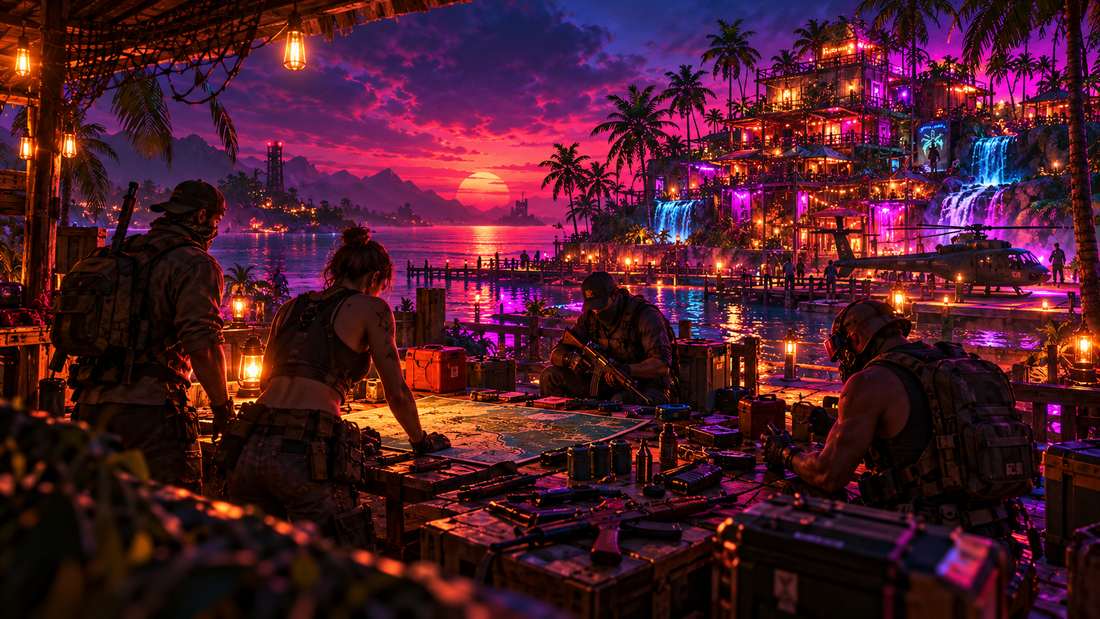
Paradise Haven
Paradise Haven is the most stable survivor settlement on the island and the center of present-day life. The district once served ordinary residents and workers rather than resort guests, which left it with the kind of practical infrastructure survivors could actually reclaim.
Today it functions as the protected social and economic hub of LOST PARADISE. Trade, player services and Paradise Operations all operate from Haven, while normal building and progression remain on the main island.
PARADISE LOST: THE RESORT
The Resort was one of the island's signature luxury properties during the height of the Paradise years. Its public spaces, guest services and surrounding grounds were designed to sell the version of the island visitors were meant to see.
During the evacuation, the property was repurposed as a temporary staging point. The building survived, but its role did not. It now stands as one of the clearest remnants of the island's civilian past.
Deadlight City
Deadlight City was once part of the island's commercial and residential core. Apartments, businesses and public services made it one of the places where permanent residents actually lived rather than vacationed.
Power failures, fires and emergency closures spread through the district during the final stages of the evacuation. Survivors later gave the area its current name after the grid failed and never fully returned.
Iron Reef Penitentiary
Iron Reef began as a regional detention facility. In the final years of Paradise, Cobalt assumed control of parts of the site and expanded security far beyond what a normal prison required.
Recovered records indicate the facility was being used for containment before the island was fully evacuated. What was transferred there, and how much of it remained after staff withdrew, is still unclear.
Sunfall Waterpark
Sunfall was exactly what it appeared to be: a major family attraction built during the island's tourism boom. It was not designed as a laboratory, military site or research facility.
That makes its current condition more unsettling. The abandoned pools, service areas and maintenance spaces are among the most intact reminders that ordinary families once spent their vacations here.
Temple of the Drowned Sun
The Temple predates LOST PARADISE, the resort development and Cobalt's arrival. Its age places it among the oldest known structures on the island.
Cobalt activity around ancient sites increased during the expansion years, but surviving public records do not explain why. The relationship between these ruins and Cobalt's long-term interest in the island remains unresolved.
Deepwatch Observatory
Deepwatch was presented as a marine environmental research station. Its location and equipment made that explanation plausible enough for most residents.
Later records suggest the station's work was considerably more focused than public reports indicated. The observatory continued operating after civilian access to surrounding areas had already been restricted.
Raid World
The offshore raid sectors occupy a former structural and weapons testing range established during the Cobalt era. Their isolation made them suitable for destructive testing without exposing the civilian population to what was happening there.
The range was later absorbed into the systems associated with R.U.S.T. The five active sectors now present increasingly hardened fortified sites, reached through the surviving Arrival Barge network.
Cobalt Infrastructure
Many familiar Rust monuments belong to the later layers of the island's history. The Airfield, Train Yard, Power Plant, Water Treatment Plant, Military Tunnels, Launch Site and Nuclear Missile Silo each represent different stages of the shift from civilian destination to industrial, military and survival-test infrastructure.
Some were built over existing Paradise systems. Others appeared only after Cobalt had established enough control that large sections of the island could be closed to the public.
The older island
Not every ruin belongs to Paradise or Cobalt. The jungle structures and other ancient sites point to an occupation of the island that predates the modern settlement entirely.
Those locations remain one of the least understood parts of LOST PARADISE history.